IJC SURVEY: GREAT LAKES CITIZENS VALUE THE GREAT LAKES FOR DRINKING WATER, RECREATION AND AS TREASURED NATURAL RESOURCE
Apr 18, 2016
Eighty-five percent of Great Lakes citizens believe protecting the Great Lakes is highly important, according to one of the largest surveys ever conducted on public perception of the world’s largest freshwater system.
The survey, which included almost 4000 American and Canadian Great Lake residents, revealed that respondents believe protecting the lakes is important for many important reasons. These include recreation, wildlife protection, economic stability and human health.
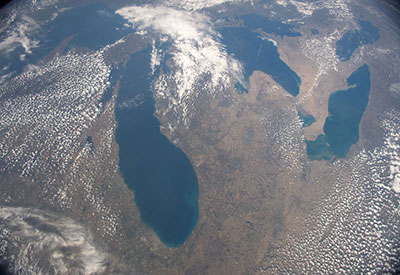
Photo: The Great Lakes as seen on the International Space Station on May 2, 2015. (Image by NASA/Terry Virts)
But of all the good reasons for protecting the Lakes – it was recreational water use that topped the list. The survey found that 86% of respondents believe it’s important to protect the Lakes for recreational water use.
The IJC survey is a powerful reminder of what Great Lakes residents want. They want beaches that are open, shoreline that is accessible, water that is clean to swim in, and fish that are safe to eat.
The IJC survey is an important reminder to our elected officials of the importance of investing in the Great Lakes and doing it in a way that connects people to clean water. It is about investing in future generations, a clean environment and stable economy – but also about responding to peoples’ need for recreational water.
A waterbody is not an abstraction or just some name on a map – it’s where you go for exercise, adventure, relief from the heat on warm summer days. It is where some of your best memories come from.
Let’s keep it that way and improve our stewardship of the Lakes for people.
* The IJC is an independent binational organization that was established by the Canada and United States to regulate shared water uses and investigate transboundary issues.
Read the full story here: http://www.waterkeeper.ca/blog/2016/4/14/ijc-survey-great-lakes-citizens-value-the-great-lakes-for-drinking-water-recreation-and-as-treasured-natural-resource