Introducing OneNet® – NMEA 2000® on steroids
 NMEA 2000® is about to take off! Over the last few years, marine electronics manufacturers have been working overtime to develop a common infrastructure to transport NMEA 2000® messages over Ethernet. The solution is called OneNet®, and it’s scheduled to be operational by late 2014.
Some manufacturers currently use higher bandwidth Ethernet for video as well as for proprietary messaging on Ethernet to add NMEA 2000® messages. While this approach may be expedient, there are problems with individual solutions, including a lack of interconnectivity and support of many different implementations.
“NMEA OneNet® does not replace NMEA 2000®,” said NMEA Technical Director Steve Spitzer. “NMEA OneNet® uses the physical and network layer standard based on the IEEE 802.3 Ethernet Standard. OneNet® complements the NMEA 2000® Standard and preserves existing and future NMEA 2000® messages (PGNs). OneNet® is not recommended for real-time critical data, because the NMEA 2000® Controller Area Network (CAN) enables prioritization and guarantees that the message transmitted will always get through to certified devices. IEEE 802.3 cannot provide the same guarantee of message delivery.”
OneNet® was initiated by a group of manufacturers who asked the NMEA to standardize a method of transmitting and receiving NMEA 2000® messages on Ethernet. The initiating manufacturers contributed their engineering expertise and have been an integral part of developing OneNet®. Participating on NMEA’s OneNet® Committee are Actisense, Airmar, Digital Yacht, the Electronics and Telecommunications Research Institute of South Korea, FLIR, Fugawi, Furuno, Garmin, Johnson Outdoors, Korean Maritime University, Krill Systems, Maretron, Molex, Mystic Valley Communications, Navico, Raymarine, the U.S. Coast Guard, and Victron Energy. Additionally, the U.S. Coast Guard R&D Center has contributed invaluable input to ensure that OneNet® meets the needs of commercial vessels in addition to those of national and international standards authorities.
The committee believes that OneNet® will not replace NMEA 2000® or NMEA 0183 within the foreseeable future. Each will have its place on a boat.
The primary goals of OneNet® are to:
• Transport NMEA 2000® network messages on Ethernet in a standardized manner.
• Complement and interoperate with the established NMEA 2000® network standard.
• Establish standardized gateway rules between NMEA 2000® and NMEA OneNet®.
• Support high-bandwidth applications such as video data transport, which is not possible using the NMEA 2000® network.
Some of the key features of NMEA OneNet® are:
• Greater bandwidth. With up to 1 gigabit or faster transfer speed directly to the OneNet® devices, Ethernet is 400 times the speed of the NMEA 2000® CAN bus.
• Scalability. OneNet® backbones may exceed 100 Mbits/sec, using other standard Ethernet physical layers such as Gigabit Ethernet and fiber optics.
• More devices supported. OneNet® can support up to 65,024 physical devices versus CAN bus’s 50 devices, allowing the creation of larger and more complex networks.
• Greater power capacity. With Power Over Ethernet (PoE), each physical device may be separately powered by up to 15.4 watts directly from the Ethernet switch.
• Video. OneNet® incorporates existing internationally recognized video standards.
• Ubiquitous technology. Ethernet is used everywhere in homes, offices, and industrial environments and is well understood. Many marine electronics products already implement and support the Ethernet protocol.
Finally, there are two innovative standardized concepts that are also essential requirements of NMEA OneNet®:
• A standard device web page will provide basic fundamental product information.
• Simple Service Discovery Protocol (SSDP) allows OneNet® devices to advertise their presence to other SSDP-compatible devices on the network.
This is like your printer telling your PC or Mac that it’s there.
The committee is still working hard to complete the last of the technical details of this DRAFT NMEA OneNet® standard. Here’s the timeline:
Completion of the written standard by the end of 2013
Completion of beta testing by the end of 2014
Publication of the standard by the end of 2014
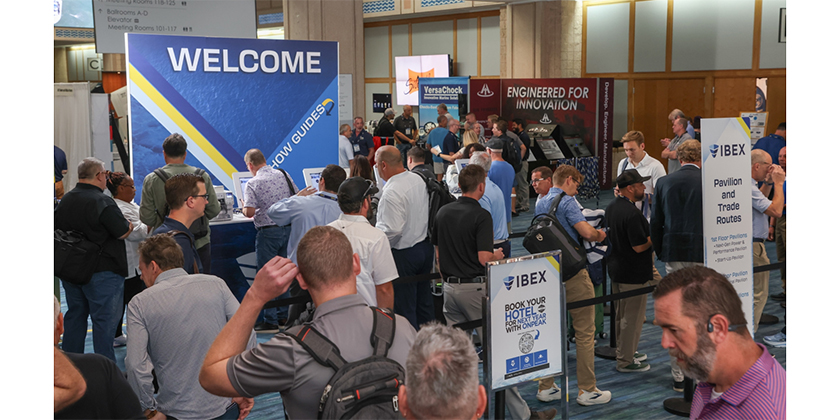
Additional details of OneNet® will be discussed at the NMEA International Marine Electronics Conference & Expo in Orlando, Florida, September 23–29. The OneNet® Committee is looking for manufacturers who wish to participate as beta testers. Please contact Steve Spitzer at sspitzer@nmea.org if you would like to participate on this committee.