STUDY HIGHLIGHTS CARBON MONOXIDE HAZARDS ON HOUSEBOATS
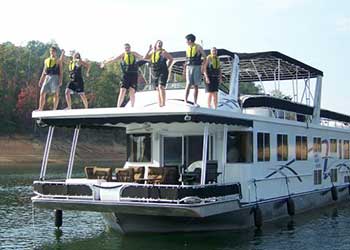
Boaters and marina workers should exercise caution this summer before taking to the seas. A study published online in the Journal of Occupational and Environmental Hygiene (JOEH) outlines hazards posed by carbon monoxide levels on houseboats that use gasoline-powered generators without emission controls, along with controls that are available to reduce exposure to carbon monoxide from the generators.
The study, conducted by researchers at the National Institute for Occupational Safety and Health (NIOSH), found that uncontrolled generators routinely emit carbon monoxide concentrations well above NIOSH’s immediately dangerous to life or health (IDLH) value of 1200 parts per million. The analyses measured carbon monoxide emissions using various sampling techniques that included exhaust emission analyzers, detector tubes, evacuated containers (grab air samples analyzed by a gas chromatograph), and direct-reading carbon monoxide monitors.
“Houseboats that exhaust uncontrolled generator combustion gases beneath or near the rear deck indicated that extremely hazardous carbon monoxide concentrations can accumulate in that area,” said Captain Ronald M. Hall, MS, CIH, CSP, the deputy branch chief in the Engineering and Physical Hazards Branch in the NIOSH Division of Applied Research and Technology in Cincinnati, Ohio. “These hazardous conditions were exacerbated when the drive engines were operating, placing employees who worked on or around the boats, as well as the boat operators, at risk.”
The study began in 2000 when NIOSH received a request from the U.S. Department of the Interior (DOI) and the National Park Service to conduct a health hazard evaluation after carbon monoxide-related poisonings were identified on and around houseboats. The DOI asked NIOSH researchers to evaluate the exposure to employees who worked on or around houseboats while the generators operated, as well as to the public who operated the boats.
Following the investigations, NIOSH engineers worked with major houseboat and generator manufacturers to develop novel engineering controls to reduce carbon monoxide exposure and poisonings. Between 2004 and 2005, the two largest manufacturers of marine generators introduced low carbon monoxide emission models, which resulted in reductions of up to 99 percent in carbon monoxide concentrations in occupied areas on and around the boats.
In addition, NIOSH worked with the U.S. Environmental Protection Agency to put regulations in place that affect marine engines. These new regulations, which apply to carbon monoxide emissions from generators, stern-drive and inboard engines, and personal watercraft and outboard engines, are expected to result in significant reductions in carbon monoxide emissions and provide a much safer environment for both workers and boat users.
“Controlling exposures to occupational hazards is the fundamental method to protect workers. Recommendations from this effort have enabled the marine industry to widely embrace innovative solutions to mitigate this hazard,” said Hall.
Read the full study in the Journal of Occupational and Environmental Hygiene and learn more about the health effects associated with carbon monoxide exposure.
Source: Journal of Occupational and Environmental Hygiene