A Communications Lesson From IBEX

October 20, 2026
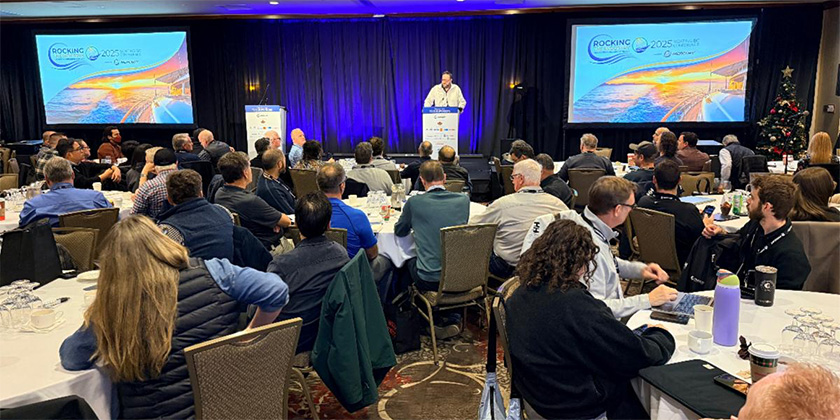
I’ve just returned from the International Boat Builders Exposition, IBEX, in Tampa, Florida, and I wanted to share a little business communications lesson that I learned. Actually, the lesson was delivered to me long, long ago by the owner and founder of the first advertising agency I ever worked for. He was a wonderful person, did a lot for me in my career and he had put a lot of time and energy into thinking about and learning about effective communication. I mention this because I met quite a number of people at the IBEX Show. I gathered a handful of business cards and I just sat down to organize them for my follow up. One of the very first cards in the stack was a brilliant example of what not to do with a business card.
My advertising agency mentor was Bill Whitehead of Whitehead, Titherington & Bowyer Limited, a great little Canadian ad agency in the day. Bill‘s advice to me is still very valuable and I want to share it with you. First, people still keep and use classic business cards. I have a binder of plastic sleeves, and I put all the business cards that I get at the IBEX Show for example, in one sleeve. That makes it much easier for me to find people that I may want to contact later.
Bill Whitehead‘s advice was that it is the individual’s name and title that should be front and centre on the business card. The actual name of the business can take second billing, although most companies will have a logo or wordmark that can quickly communicate the name of the business.
With the rise of digital communications there is a lot more information that needs to go on a business card now than there was back then. In the 1970s, your company, telephone number and your postal address was all you needed. Normally, the business phone number went to a switchboard that was answered during business hours and the receptionist could generally do a great job of locating the person you were trying to reach.
First complaint about modern times – no receptionist and often a bewildering number of “press 7…press 9…choices” bringing little or no additional information and their voicemail mailbox is sometimes full. Even when you can leave a message, they seem to get ignored. If they didn’t keep your card, they probably don’t remember who you are after a big show like IBEX.
Worse, it seems that the voicemail is there to tell you to send an email, presumably so the recipient can decide whether or not to even return your call. Professional courtesy is woefully out of date. Consider how much money the company has spent to have a display at IBEX or for an attendee to be there.
I’m prompted to send this because one card in particular was very annoying. The company’s name and logo were quite prominent and the staffer‘s name was clear enough along with his title but from there, the phone number, email, website and mailing address were in such light type, reversed out of a navy blue background, that I literally had to get a magnifying glass to discover that the name on the logo was not the same as the website. I won’t share the actual name of the company, but let’s say that it was “A B Group”.
I needed the magnifying glass to see that the website, as well as the email were going to “A B Group I . com”. Probably. that “I” was for Incorporated, but it was almost impossible to see the lowercase “I” reversed out of the navy blue background.
The purpose of a proper business card is to identify the individual and their title as well as the name of the organization if it’s not expressed in the logo or wordmark.
You want to be sure that somebody can find your card later in order to contact you if they need more information or want to buy your product.
A business card is a business tool not a show-off opportunity for your graphics guy.
Don’t lose business later by having an ineffective business card design. Last point – people without a business card, who say “Here, just scan this” may have totally lost the opportunity when the customer gets home days, or possibly even weeks later and can’t remember who or why they have that information.
With boat show season coming up fast, it is a good idea to make sure you can make a solid connection with prospective clients.
Andy Adams – Editor