Zero plastics in packaging: a catalyst for design and process improvement by Navico
Aug 22, 2022
The DAME Awards are part of the METSTRADE show and they are intended to promote excellent design practice, even in how equipment is protected and presented. An incremental step is usually made at the individual item level, but METSTRADE exhibitor Navico is well down the path of transforming the packaging on every B&G, Lowrance and Simrad® product so that it is 100 percent recyclable and sustainable. Apart from obvious environmental benefits, this four-year initiative has provided opportunities to completely rethink how the company’s packaging works, in transit, on shelves and in the hands of buyers. Kim Hollamby speaks with Navico’s Chief Sustainability Officer, Tara Norton and Sustainability Manager, Product Development, Amelia Bone.
What provided the impetus for this change?
Amelia: “When Knut Frostad joined Navico Group as CEO, he made sustainability one of our core pillars and a crucial part of our strategy. I was excited to see we were taking sustainability seriously, and working from New Zealand, it became clear we had colleagues right across our global offices who felt the same way.”
“Our primary intended outcome was to eliminate plastics in our packaging and do that right across all Navico’s products, even the ones that had been in production for some time which will switch as stock is replenished. Retrospectively changing the packaging was unprecedented because improvements of this kind would only have been introduced in parallel with new model launches in the past.”
“Work commenced in 2019, spurred by an upswelling of interest across team members working in different departments and locations with a determination to succeed, inspired by the objective. It then evolved into a proper project with planning and funding.”
How did you ensure that the project would make a meaningful difference to the environment?
Tara: “It’s one thing to get this sort of flagship project started, but to be successful, you must establish the design principles, set requirements for genuinely sustainable materials, and then always follow the rules you have specified. It’s essential to also overcome practical obstacles like the availability of materials and their cost.”
“Navico is not in the job of making packaging. We must rely on our suppliers to procure the right material from sustainable sources. Third-party certification is an essential tool to ensure our choices are authentic – such as all the paper we buy which is FSC (Forest Stewardship Council) certified.”
How easy was it to source sustainable materials?
Amelia: “Some things were easy, like switching from virgin cardboard and paper to recycled equivalents. We’ve used new materials such as replacing Styrofoam with moulded paper pulp made from recycled paper.”
“Finding a new type of bag to provide abrasion protection for our products was a challenge. It was solved by adopting Aquapak Hydropol™ bags made from non-toxic polymers that are totally soluble in warm or hot water.”
“Some issues remain a work in progress. For example, there are sets of small screws inside many of our kits provided in automatically sealed plastic bags that were cheap and fast to assemble. We tested several replacement plastics that would work on the automated machines, but they all failed our requirements because they would break down into microplastics. Currently, we’re using manually filled paper envelopes but still looking for other solutions that can run on a less expensive factory process. We’re also investigating a new plastic pallet wrap.”
Aside from the environmental impact reduction of materials, have you been able to engineer other improvements because of running this project?
Tara: “It was essential to have early collaboration between our marketing and mechanical designers, supply chain team, and suppliers to work through some of the problems and get a solution that works well and looks great. It has enabled this project to deliver several significant improvements in addition to the primary objective.”
“Our redesigned packaging has changed in form factor, from the cube-like shape we previously used to a flatter design. The new design reduces the shipping volume per unit, with a resultant saving on carbon footprint and shipping costs.”
“We use a craft brown paper box across all products. Combined with a printed outer paper sleeve, it offers better quality reproduction than if messaging was imposed directly on the cardboard itself. The change in the box aspect ratio has provided a lot more front signage space, enabling a much bigger hero shot which is more attractive on the shelves.”
“We’ve also greatly improved the unboxing experience. Everything is very tidy when you open the packaging, and you can see the unit straight away.”
What lessons have you learned through this project?
Amelia: “The main lesson was a cross-functional team wins every time. Like many companies, we can get siloed in our projects. We’ve been able to involve passionate people with diverse experiences across many areas including product and graphic design, user experience, technical mechanical engineering, sourcing, and marketing, all working in several countries including the US, Mexico, the UK and New Zealand. Of course, everyone enters a project like this with their personal vision. That can cause some conflict early on, but we really got the best solution by harnessing everyone’s expertise from the beginning.”
“Identifying the people with the right expertise for a given issue, letting them own that area, do the research, and come back and present their recommended solutions made a significant difference. We learned a lot from the practical experiences of our teams across the globe before committing to the final designs.”<
“Another big lesson was test and retest. We did learn a few things from some minor issues in the field after we released the new packaging. However, most pitfalls were avoided by setting rigorous standards and testing against them.”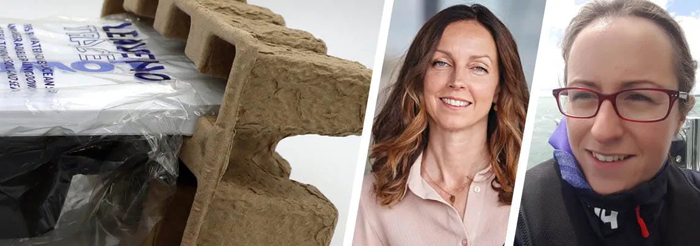
What is the importance of this project to Navico’s broader sustainability ambitions?
Tara: “Our sustainable packaging project has put us ahead of statutory regulation changes, such as the new plastic packaging tax in the UK. It also showed that we could succeed on a sustainability project and provided a model for how we can continue to do that in the future.”
“As a company, we have a strong ambition to drive towards more sustainable operations and products, but this journey requires constant determination. We’ve created a cross-functional sustainability integration team with members from across the business and recognise people who contribute to our sustainability objectives. We will achieve results if we continue to harness the groundswell of enthusiasm among our team, ensure excellent user experiences and identify willing suppliers and partners who can provide suitable material in sufficient volume where we need it. We will no doubt hit barriers regarding what is available and possible, but we’ll keep pushing for improvement.”