EcoMarine Develops Underwater ROV to Remove Invasive Species and Reduce Emissions
Dec 10, 2024
By Mathew Channer
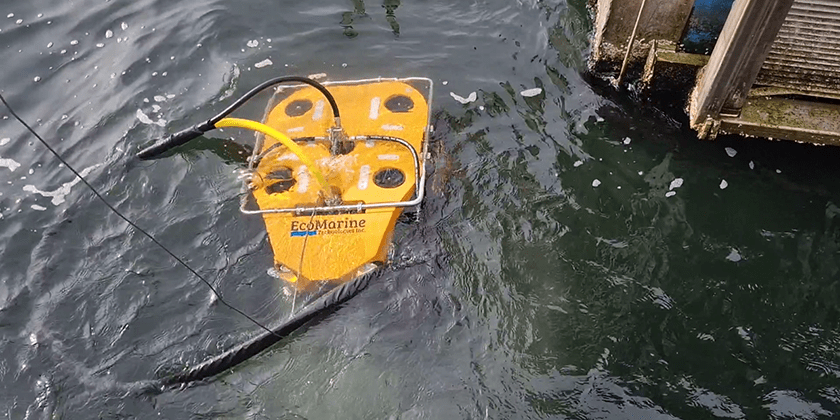
Canadian company EcoMarine has developed an underwater remote operated vehicle (ROV) to reduce the spread of invasive Zebra Mussels in Canadian waterways and dramatically improve greenhouse gas emissions from international shipping.
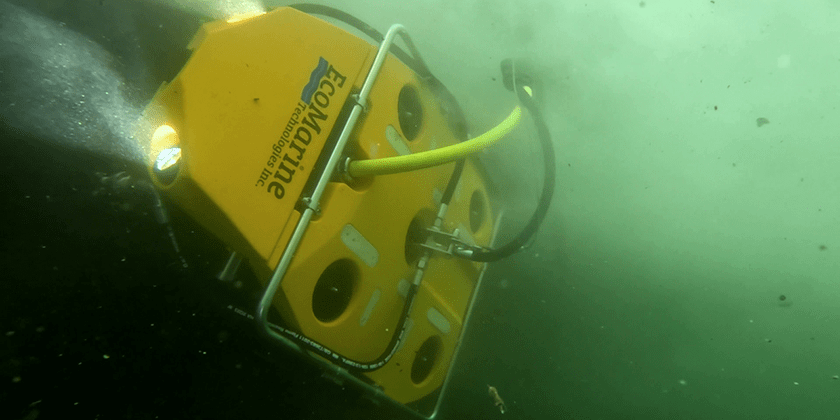
EcoMarine’s OmniBot ROV is a cutting-edge underwater cleaning device that uses thrusters to bind to underwater surfaces. Using pressure thrusters instead of traditional magnet technology allows OmniBot to bind to surfaces other than metal, such as concrete, which Zebra Mussels can quickly spread across in Canadian inland waters.
The OmniBot ROV utilizes cavitation instead of scraping or brushing when cleaning surfaces, making it more effective at removing mussels and other hard biofouling without damaging the surface underneath.
“The power industry in North America spends billions every year cleaning Zebra Mussels and other species off their infrastructure,” said EcoMarine CEO Dan Ruegg. “We designed the cleaning system of the ROV in such a way that we can adapt it into a collection system so whatever is moved from the surface is collected into a filtration system and then clean water is put back, removing mussel spores.”
Last month EcoMarine successfully demonstrated commercial use of OmniBot in Canada, highlighting its effectiveness as an underwater cleaning device not just in fresh water but in North Atlantic waters as well.
OmniBot has already been successfully operated in warmer sea conditions in South-East Asia.
It’s an exciting moment for EcoMarine, which Ruegg founded to address the unique environmental challenges faced by the marine industry, including greenhouse gas emissions.
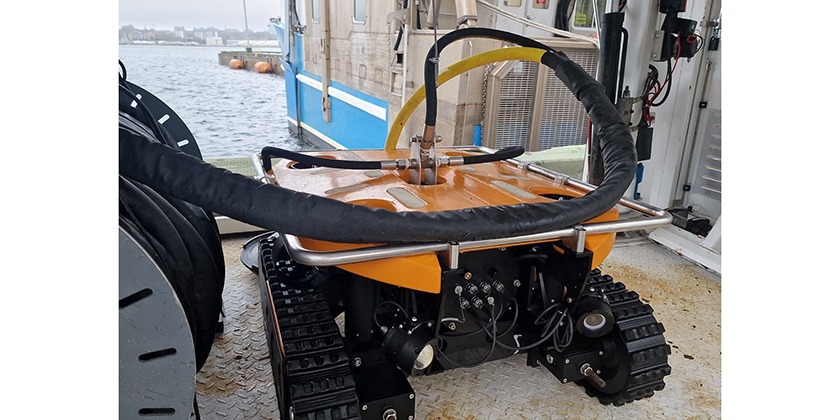
“When people think about greenhouse gas they think about industry on the ground, but they’re not thinking as much about the industry moving around on the water,” he said. “There aren’t a lot of green technologies available for the marine industry. Our mission with the ROV is to reduce the barriers to frequent hull cleaning to improve efficiency.”
Biofouling on large vessels equates to approximately a 22 per cent decrease in fuel efficiency over five years, which is generally when large ships are dry-docked for inspection and cleaning. Using OmniBot, these vessels can be regularly and effectively de-fouled while at anchor or in port, improving efficiency and dramatically reducing carbon emissions on a global scale.
EcoMarine has received strong industry interest in OmniBot, and Ruegg is excited to see his company make a difference, especially in his own backyard.
“Being Canadian, we also want to create a benefit for our own country,” he said. “And we’re finding in Canada and North America that more vessels need more attention for cleaning.”
Ruegg says it’s important for the marine industry to be moving in a more eco-conscious direction.
“Companies aren’t people, but companies are run by people,” he said. “We care about future generations, and we care about the world we leave behind for those future generations.”
For more information visit https://ecomarine.tech/