Oily black soot? with RPL, it simply wipes away
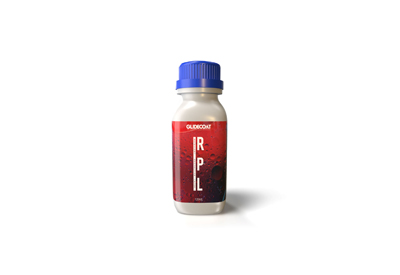
Glidecoat RPL

May 9, 2022

Unlike standard boat grime that’s easily removed with a soapy deck brush, oily black soot is another matter. Carbon-based airborne pollutants create streaks on cabins and hulls, while diesel engine and genset exhaust leaves unsightly residues. Both require harsh chemicals and backbreaking scrubbing to remove. The solution is to prevent stains from setting in the first place by using Glidecoat RPL (Repellent Protective Layer).

Made in the USA, Glidecoat RPL reacts with sunlight to chemically break down dirt and other contaminates. The oil-repellent top coating is also hydrophilic. This creates a self-cleaning action where water sheets off the coated surface, removing grime and oily black soot with it.

RPL is most effective when used in combination with Glidecoat’s innovative Marine Ceramic Coating, enabling residual soot to be simply wiped away with a cloth. But when used on bare or waxed paint or gelcoat, staining is still far easier to remove when RPL has been applied. This dramatically lowers maintenance time and costs, whether for the owner of a 35′ sportfisher doing the job himself or a crew detailing a 150′ megayacht.

Using Glidecoat RPL is straightforward for both the DIYer and professional marine detailer. The unique formula can be applied with a sprayer by lightly—but thoroughly—misting a 3′ x 3′ section. Or if by hand, a quarter-sized dollop is placed on a microfiber applicator and worked in an overlapping up-and-down, side-to-side pattern. The surface is then buffed with a clean microfiber cloth to remove any excess coating and achieve a uniform finish. RPL needs to cure for 12 hours before getting wet. A case study is atwww.bit.ly/RPL-CaseStudy.

A 50ml bottle of Glidecoat RPL covers up to 110 sq. ft. and costs $99 USD; 250ml is $365 USD and covers up to 550 sq. ft. Marine Ceramic Top Coating Kits start at $295 USD.

www.glidecoat.com.

Related Posts


Good Advice that You Can Share – The Art of Anchoring  

Unless a boat is secured, it will drift away. If it cannot be attached to something secure, such as a dock, piling, mooring buoy, tree, or boulder, it must be anchored. There is much more to anchoring than simply tossing the anchor over the side. 
 
An anchoring system has two parts: the anchor itself and the rode which connects the anchor to the boat. To be effective, an anchor must have good holding power, and the rode must be strong enough to withstand the strains that are put on it. 

Read More


Need to Catch up on News This Week?

Every Tuesday we publish a fresh Digest with informative articles pertaining to the Canadian boating and marine industry. Stay up to date with the latest products, research and industry developments.

Missed an Issue of Boating Industry Canada News Week? If you’re looking for a specific issue, or simply want to catch up on previous issues, check out our Boating Industry Canada News Week Archives.

Not signed up for News Week? Subscribe here.


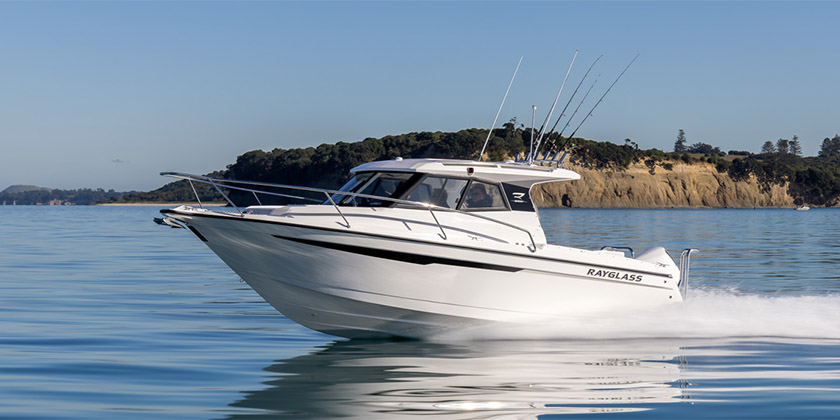
Rayglass 2400 makes its Australian debut at the 2026 Sydney Boat Show

Rayglass Boats, a Brunswick Corporation (NYSE: BC) brand and a globally recognized designer and manufacturer of premium power boats, today announced that Australian boaters will get their first chance to see the Rayglass 2400 it in person for the first time. Queensland Marine Centre will bring the 2400 to the 2026 Sydney Boat Show, running 30 July – 2 August at Sydney Showgrounds, Sydney Olympic Park at Stand D104. The next generation 2700 will also be on display.

Read More


ePropulsion Enters Powered Kayak Fishing Market with Innovative kLite Electric Outboard

ePropulsion Americas, the global leader in marine electric propulsion systems and services, has announced that it is entering the powered kayak market with the all-new kLite 750 electric outboard. Building on the award-winning technology that shattered convention with the highly portable eLite, the kLite 750 is powerful, but contained in a lightweight and compact form factor ideal for recreational or fishing kayaks alike.

Read More