Marine Industry Career Path: Nathanial Stabenow
Apr 3, 2023
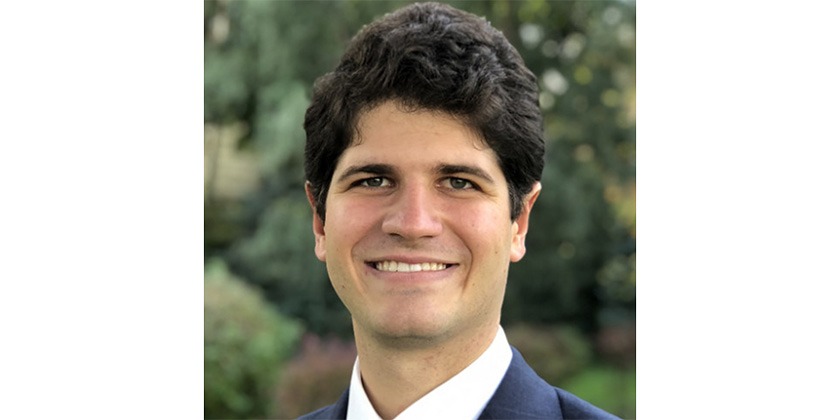
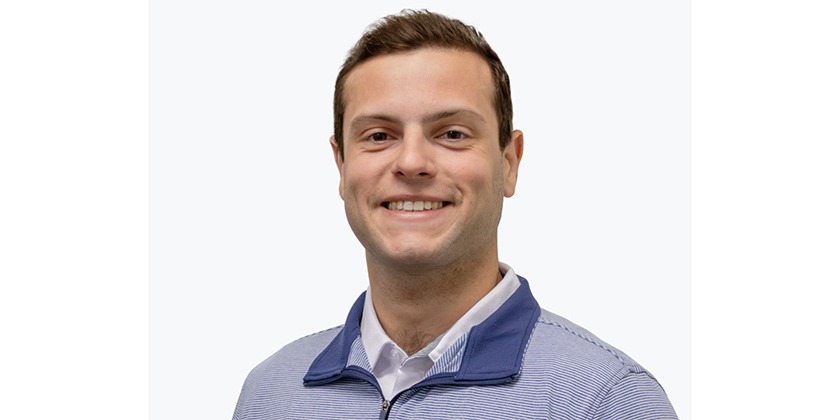
Introducing the next graduate in our Boating Industry Canada News Week marine career path series, Nathanial Stabenow from the East Coast of Canada.
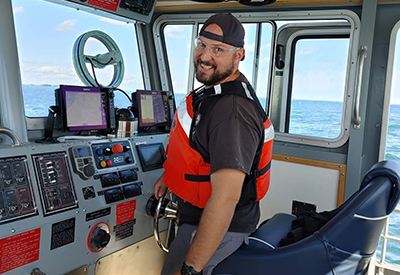
An individual of many hats, Nathanial has had a diverse career in the marine industry taking part in commercial diving, marine navigation, rigging and boat building. He now works as a marine engineer on the LaHave ferry in Nova Scotia. Here is Nathanial’s unique career path.
Full Name: Nathanial Stabenow
School: Canadian Working Divers Institute (CWDI), NSCC Marine Institute, NSBA
Program: Category 1 Commercial Diving, Marine Navigation & Marine Industrial Rigging, Boat Builder Apprenticeship
Graduating Year: 2006, 2009-2010, 2013
Current Workplace: LaHave Ferry
What is your background in the marine industry? Tell us a bit about how you got into the marine industry.
I grew up and currently live in Nova Scotia. I’ve been drawn to the water ever since I can remember. I got started deep sea diving in the Gulf of Mexico building underwater pipelines for oil and gas. The industry hit a downslope, so I decided to go back to school for marine navigation and industrial rigging. With the offshore industry still spiraling downward and some life changes, I looked into something closer to home, so I started building boats.
What made you choose your program?
My father was a saturation diver for close to 40 years and I have been obsessed with wanting to be a diver since I was a child. Once the offshore industry fell out, I had grown up around boat yards and boats, so it seemed like the logical thing to do was to build boats. From a very young age I was surrounded by nautical knowledge from my grandfather who was a captain on the Great Lakes for his entire career. I decided to have that option in my back pocket which brought me to the nautical institute.
What was your path after graduation and what are you currently doing now?
After graduating from the boat builder program and having my industrial rigging, I was able to have a job in the industry for 13 years. The cool thing about the apprenticeship was you could work while doing your blocks, so the majority of the course was hands-on learning.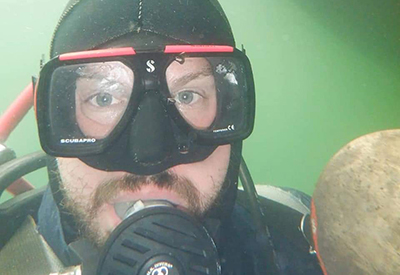 What kind of practical experience did you get through your program?
It’s a never-ending list really. With my diving I got a lot of mechanical, construction and boat handling experience. Through my rigging program I learned knot tying, splicing ropes and wire, crane work and more ship handling. In the boat building program I learned to use hand tools, power tools, traditional and modern building methods like fibreglass, wood and metal, electrical and mechanical work and more boat handling.
What was a highlight of your program?
For all my programs it was putting every last bit of effort I had into doing the job and then seeing that finished product at the end. There is really no better feeling.
What have been some highlights in your career so far, post-graduation?
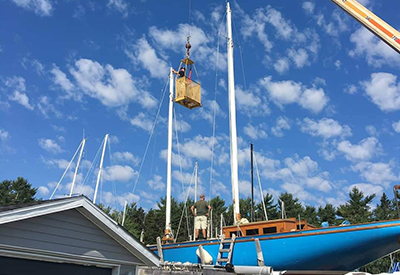
A lot of my highlights were getting to work with the generation above me and absorbing their knowledge as best I could. I was extremely fortunate (and still am) to work with some very talented individuals through all aspects of my career. From learning how to shape wood, moulding fibreglass, to welding and traditional rigging. These all led me to being involved in some pretty awesome projects such as building a 48ft custom Bahamas motor sailor to a series of 40ft aluminum landing crafts for Canada’s Navy.
 Can you comment on the differences between being a boat builder and now a marine engineer and what made you choose these two different paths?
As a boat builder you are exposed to so many different types of trades. Over my 13 years I enjoyed working on traditional wooden boats. As my career advanced, I became more interested on the mechanical sides of things and the handling of the boats. That brought me to engineer on the LaHave cable ferry where we maintain the engine, generators and the hydraulic system
How have you seen the marine industry change over the past couple of years?
There are certain aspects of the industry that I have not seen change at all, the main mentality being, “if it ain’t broke, don’t fix it.” One change I have seen though is a big push for unmanned survey vessels which are trying to become solar and electrically powered. Another is a push for more modern designs for boats to carry more cargo and burn less fuel which is the ultimate goal.
What is one piece of advice you could give someone entering the marine industry?
All I can say is DO IT! However, it is a very diverse industry, which is great. Keep your options and mind open and don’t limit yourself to one thing.
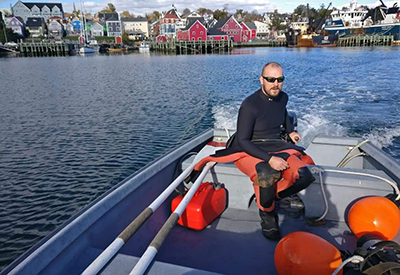 Are you a power boater, sailor, or both?
Both! I grew up sailing but now own a power boat.
Your fondest/funniest memory out on the water?
My first dive in the Gulf of Mexico to do a pipeline stinger check. I will never forget that rush or the beautiful water.
Find out more about Nathanial and the Nova Scotia Boatbuilders Association:
Allegra Smith-Herriott is the Associate Editor for Canadian Yachting Media. She is a Sport Media graduate from Ryerson University as well as an active sailor and power boater on Georgian Bay. She can be reached at asmithherriot@kerrwil.com