Recreational craft and invasive species – how to manage biofouling to stop the spread
Nov 1, 2022
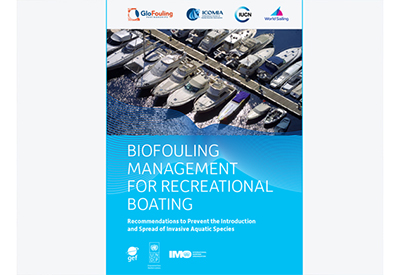
New Biofouling Management for Recreational Boating Report is published
Killer shrimps, sea squirts and the spiny water flea are all examples of invasive alien species that have been introduced to new areas in various parts of the world by recreational craft such as boats, yachts and other small craft.
Invasive alien species are known to be one of the biggest drivers of biodiversity loss, and their management especially in marine environments is incredibly challenging. Therefore, the most cost effective away of addressing their impacts is to prevent their spread to new areas.
To tackle this issue, the GloFouling Partnerships, led by the International Maritime Organization (IMO) and in collaboration with the International Council of Marine Industry Associations (ICOMIA), World Sailing, and the International Union for Conservation of Nature (IUCN), has published a new Biofouling Management for Recreational Boating Report. The aim of the report is to stop the spread of invasive alien species which can adhere to hulls and other areas of recreational craft by addressing how to manage biofouling.
The report provides an overview of invasive alien species which are believed to have been introduced to different areas of the world through recreational boating. Current regulations and guidance are presented, as well as an overview of anti-fouling paints.
The report was launched during the 2nd GloFouling Partnerships R&D Forum and Exhibition on Biofouling Prevention and Management for Maritime Industries, held at IMO Headquarters in London 11-14 October.
Recreational vessels can start to collect biofouling on their hulls within hours of being in the water. Dry-sailed craft, such as trailered boats, dry-stacked craft or portable craft rely on dry storage to avoid the accumulation of biofouling on their hulls, whereas vessels that stay afloat will have some form of anti-fouling coating as protection. As well as hulls, bilges, lockers or cooling system – so-called niche areas – are key areas to consider for biosecurity. Paddle boards and clothing such as wetsuits and waders can carry larvae of potentially invasive species.
Some species – like the killer Shrimp Dikerogammarus villosus – cannot survive in dry conditions, so “Check, Clean, Dry” has become the mantra in preventing their spread. The killer shrimp, native to the Black Sea and Caspian Sea regions, has been introduced to waters in Norfolk in the United Kingdom – via a boat, windsurfer or even angling gear. It is larger than the local UK shrimp and is an aggressive hunter, feeding on native freshwater shrimp, damselflies, water boatmen as well as small fish and eggs.
Other species may be carried in larval form on clothing such as wetsuits. An example of this are the veligers (larvae) of quagga or zebra mussels. These mussels can litter beaches and decaying mussels produce a foul smell. The quagga mussel Dreissena rostriformis bugensis, originating in Ukraine, and is now in North America. This species was identified as the top-ranking invasive species threat to the United Kingdom.
The report includes guidance and posters for best practices to prevent the spread of invasive species and ensure biosecurity:
• Guidance for all users of trailer boats, including equipment, and personal kit – Includes ski and wake boats, fishing boats, sailing dinghies, canoes, kayaks, windsurfers and SUPs.
• Guidance for yachts and motorboats – local coastal / estuary cruising – Includes boats of all sizes stored afloat for the season, in marinas, harbours or moorings.
• Guidance for longer distance cruising or deliveries – Yachts and motorboats – Includes extended cruising and delivery trips between countries and continents, organised rallies and solo adventures.
• Guidance for Marinas, sailing clubs, boat wash down and slipways – Operators of these facilities have a crucial role to play in preventing the arrival and spread of Invasive Aquatic Species (IAS) by promoting good biofouling management practices.
Download Biofouling Management for Recreational Boating: Recommendations for improved biosecurity to prevent the introduction and spread of Invasive Aquatic Species here:
https://www.glofouling.imo.org/publications-menu