A BOOST IN SPEED AND FUEL SAVINGS WITH SCRUBBIS
Jan 22, 2019
 Powerboaters and sailors may disagree on how to get around, but they agree that fast is fun. Algae and other marine life clinging to the hull, however, rob a boat of its speed—even with bottom paint. With the Davis Scrubbis Underwater Hull Cleaning Kit from Davis Instruments, it’s easy to get up to a 30% boost in speed while saving up to 20% in fuel. And because it’s gentle on expensive ablative, hard and hybrid coatings, toxic chemicals aren’t inadvertently introduced into the water. The innovative system makes its Miami International Boat Show debut, Feb. 14–18, 2019.
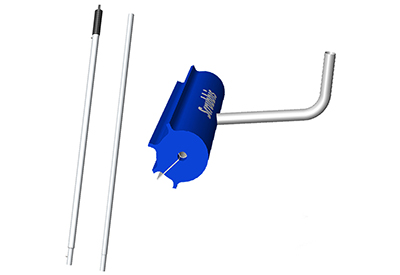
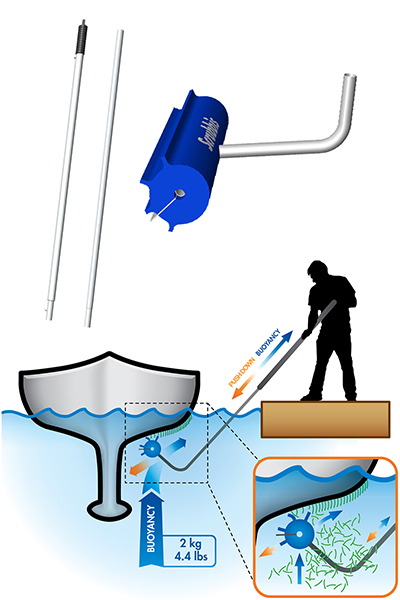
Davis Scrubbis is a simple—but altogether new—concept. The 5″ dia. x 16″ wide cleaning head is buoyant. Attached to the 43″–86″ telescoping aluminum handle, it’s pushed down the side of the hull. 4.4 lbs. of flotation brings it back, removing scum. The durable foam-like material is gentle on bottom paint and, used regularly, keeps fouling at bay. For stubborn spots, the head can be turned to expose a stiff cleaning fin.
With the angled tube and 43″ extension, there are few spots Davis Scrubbis can’t touch with its 12′ reach. Strakes, steps, bulb keels and deep rudders can all be cleaned. Because of its versatility, it can be used with equal effectiveness from a dock, dinghy or deck. A 30′ boat can be tackled in about 20 minutes.
A number of attachments are available for specialized cleaning tasks. Groovy Scrubbis has stiff bristles that remove barnacles, worm casings and grass. The Waterline Brush has three cleaning fins and a replaceable scrubbing pad for tenacious scum.
The Davis Scrubbis Underwater Hull Cleaning Kit includes the cleaning head with curved tube, telescoping pole and extension, and sells in the U.S.A for $149.99; Groovy Scrubbis is $64.99; and the Waterline Brush is $64.99.
Visit: www.davisinstruments.com.