New AI Safety Tools Aim to Keep More Eyes on the Water for Operators
September 22, 2026
Situational awareness remains one of the more persistent challenges facing boat operators, whether monitoring traffic in a crowded channel, tracking a vessel on a collision course at night, or simply keeping tabs on conditions around the boat while attention is split between the helm and other tasks. As marine electronics manufacturers continue to add processing power and automation to multi-function displays, a growing share of that workload is shifting from the operator’s eyes to the system itself.
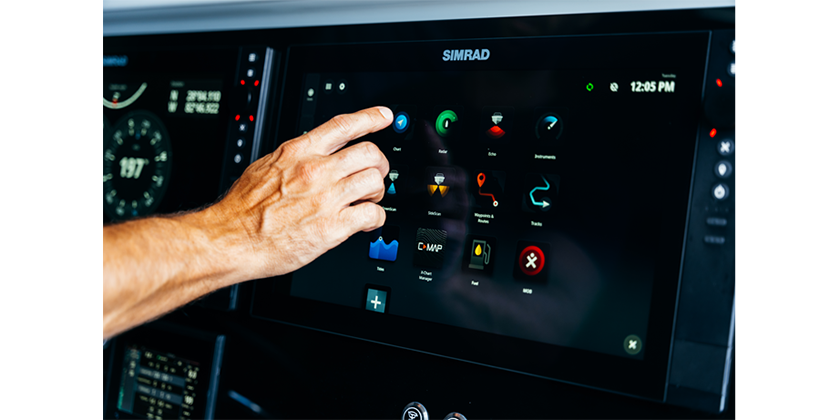
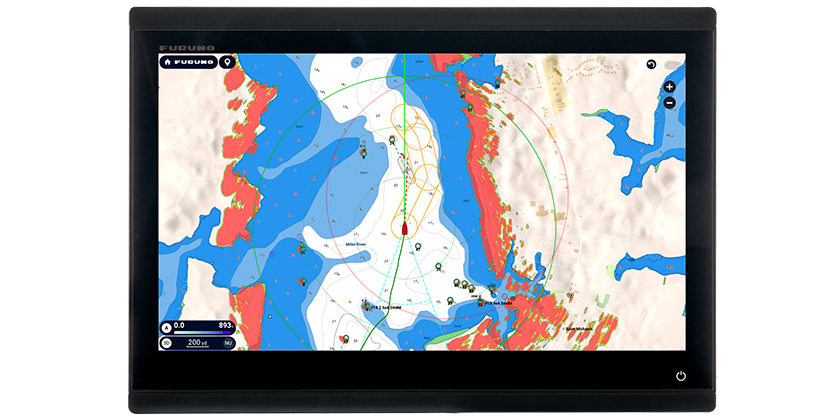
One example of that shift is Furuno’s TZtouchXL multi-function display (MFD) platform, which includes several tools aimed at giving operators additional information when monitoring nearby traffic, planning routes, and navigating around hazards utilizing the latest advancements in AI and sensor technology.
Its AI Routing function generates a point-to-point route based on the vessel’s draft, chart data, and other safety parameters, accounting for channels, marina entrances, and inlets. Once a route is generated, operators can edit it or add waypoints before following it.
When paired with a Furuno NXT Solid-State Doppler Radar, TZtouchXL unlocks two additional AI tools. Risk Visualizer produces a 360-degree representation of collision risk from vessels and other targets around the boat, generating dynamic icons for targets it calculates as having the highest probability of collision. AI Avoidance Route builds on that data: when a potential hazard is flagged, the system calculates a route around it using both the Radar returns and TZ MAPS chart data. The suggested route is removed from the display once the vessel has passed the hazard.
The Radar interface also includes Target Analyzer, which color-codes tracked targets based on their movement relative to the vessel using green for targets that are stationary or moving away and red for targets on an approaching course. A separate function, Fast Target Tracking, uses the Doppler capability of NXT Radar to automatically display a speed and course vector for approaching vessels. Operators can then tap an individual targets to display additional detail on the target.
The TZtouchXL lineup ranges from 10 to 24 inches, along with the TZTBBX black-box unit that allows operators to pair the processor with a display of their choice. Units on the same vessel can be networked together, sharing Radar, chart, and sensor data across multiple helm stations.
More information on the NavNet TZtouchXL platform is available at https://navnet.com/tztouchxl.