RECREATIONAL BOATING INDUSTRY EFFORTS TO EXTEND HFC-134A SUCCESSFUL
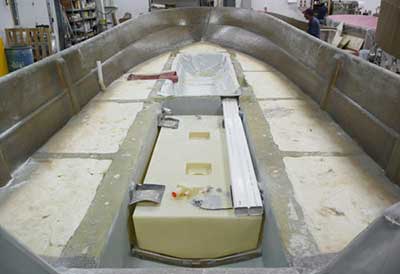
Marine Flotation Foam


On Friday, July 3rd, the American EPA published its final rule regarding Greenhouse Gases, titled “Extension of Stratospheric Ozone: Change of Listing Status for Certain Substitutes under the Significant New Alternatives Policy Program.” 

Included in this regulation is the extension of the ban on HFC-134a, a blowing agent utilized in the application of marine flotation foam, from 2017 to 2020. The extension of this ban is good news for the marine manufacturing industry, 


as HFC-134a is used by many boat builders, and is an essential tool in their production efforts.


The proposed rule from August 2014 would have banned all use of HFC-134a in marine manufacturing by 2017. With no other alternative readily 


available, this would have been a crippling blow to many manufacturers throughout the industry. To combat this misguided proposal, NMMA organized interested parties such as the U.S. Coast Guard, boat builders, and HFC-134a foam suppliers 


through Boating United, successfully convincing the EPA to extend the ban until 2020, giving more time for an alternative, Coast Guard approved substance to be made available to boat builders.


The boating industry consists primarily of 


small businesses, who have limited financial resources, market influence, and access to the supply chain. A complete ban of HFC-134a in maritime production would have proven problematic for many of these businesses, and the industry as a 


whole. The extension of the ban until 2020 gives the industry more time to phase in a viable alternative and keep these businesses operating smoothly.


To read the EPA final ruling, click here  


Related Posts


Good Advice that You Can Share – The Art of Anchoring  

Unless a boat is secured, it will drift away. If it cannot be attached to something secure, such as a dock, piling, mooring buoy, tree, or boulder, it must be anchored. There is much more to anchoring than simply tossing the anchor over the side. 
 
An anchoring system has two parts: the anchor itself and the rode which connects the anchor to the boat. To be effective, an anchor must have good holding power, and the rode must be strong enough to withstand the strains that are put on it. 

Read More


Need to Catch up on News This Week?

Every Tuesday we publish a fresh Digest with informative articles pertaining to the Canadian boating and marine industry. Stay up to date with the latest products, research and industry developments.

Missed an Issue of Boating Industry Canada News Week? If you’re looking for a specific issue, or simply want to catch up on previous issues, check out our Boating Industry Canada News Week Archives.

Not signed up for News Week? Subscribe here.


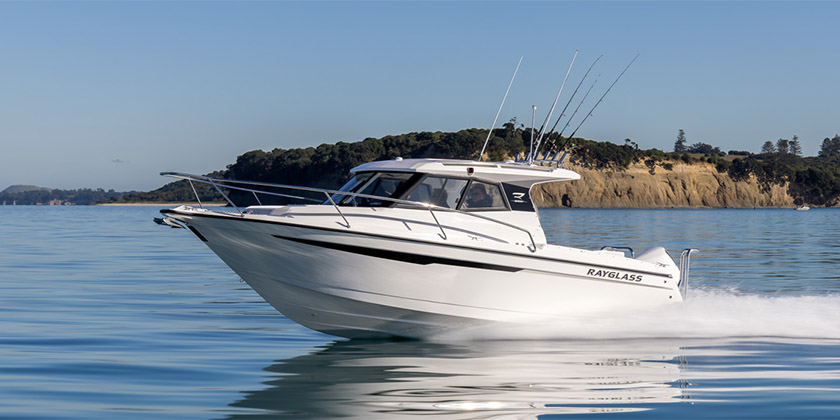
Rayglass 2400 makes its Australian debut at the 2026 Sydney Boat Show

Rayglass Boats, a Brunswick Corporation (NYSE: BC) brand and a globally recognized designer and manufacturer of premium power boats, today announced that Australian boaters will get their first chance to see the Rayglass 2400 it in person for the first time. Queensland Marine Centre will bring the 2400 to the 2026 Sydney Boat Show, running 30 July – 2 August at Sydney Showgrounds, Sydney Olympic Park at Stand D104. The next generation 2700 will also be on display.

Read More


ePropulsion Enters Powered Kayak Fishing Market with Innovative kLite Electric Outboard

ePropulsion Americas, the global leader in marine electric propulsion systems and services, has announced that it is entering the powered kayak market with the all-new kLite 750 electric outboard. Building on the award-winning technology that shattered convention with the highly portable eLite, the kLite 750 is powerful, but contained in a lightweight and compact form factor ideal for recreational or fishing kayaks alike.

Read More