U.S. RECREATIONAL BOATING INDUSTRY TURNING TO BIOBUTANOL AS ALTERNATIVE BIOFUEL
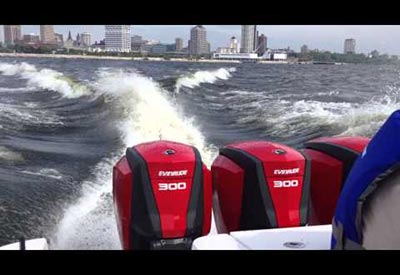
Engine manufacturers from across the American recreational boating industry have identified biobutanol as a suitable and safe alternative biofuel to ethanol, a controversial biofuel due to its damaging effects on numerous types of engines, including those that power recreational boats. For the past five years, the National Marine Manufacturers Association (NMMA) and the American Boat and Yacht Council (ABYC) under the direction and guidance of the U.S. Department of Energy and Argonne National Laboratory, have been engaged in an industry-supported program to evaluate the performance of recreational marine engines operated on fuel containing up to 16 percent biobutanol.
The research and subsequent resolution to formally move forward with butanol as an industry-wide biofuel alternative comes as the industry focuses on addressing the congressionally-mandated Renewable Fuel Standard (RFS) requiring 36 billion gallons of renewable fuel to be blended into the gasoline supply by 2022.
The American recreational boating industry is highly focused on the need to move towards alternative, renewable fuels and continues to support that effort. However, it is important to find fuel sources that are not only renewable but also safe for all engines and consumers who may use them. Methods to increase renewable fuels in the gasoline supply have primarily focused on ethanol, specifically fuel with a higher blend of ethanol such as E15 (fuel with 15% ethanol). Multiple reports show that ethanol blends greater than 10 percent cause significant damage to marine engines. As a result, the marine industry has explored biobutanol fuel blends with very promising results. Most notably, biobutanol does not phase separate in the presence of water like ethanol. Phase separation occurs when water is introduced and ethanol separates from gasoline, forming two separate solutions. An engine won’t run on the ethanol solution, which sinks to the bottom of the tank and is highly corrosive. Additional encouraging properties of biobutanol are its higher energy content compared to ethanol and the fact that it has caused no performance-related issues in marine engines.
While large scale consumer availability of biobutanol fuel blends is not expected for another couple of years, the boating industry’s supportive position is poised to encourage its market expansion by providing marine fuel distributors, retailers and consumers with the confidence that this is not only a suitable, but a more compatible fuel for boats.
John McKnight, senior vice president for government relations at NMMA says, “The recreational boating industry is proud to be on the leading edge of renewable fuel research as we continue to work towards a solution for our industry and the many others that are impacted by the RFS. Our on-water and laboratory testing of biobutanol has been conducted in a wide variety of recreational marine engines and boats, giving us confidence that this fuel is a safe, viable alternative to ethanol.”
“We are very excited that NMMA has shown industry leadership in support of renewable isobutanol,” said Gevo CEO Patrick Gruber. “Gevo has been an active partner with NMMA for the past 5 years, and has supplied all the renewable isobutanol and blended fuel used for on-water testing.”