NEW TECHNOLOGY MAKES STABILIZATION A REALITY FOR 30’-50’ BOATS
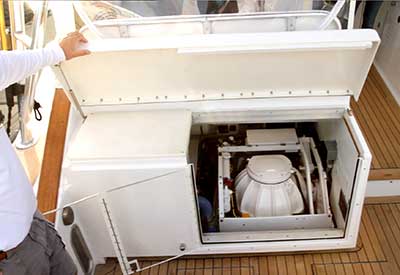
Seakeeper Stabilizer


Until now, owners of 30’-50’ boats put up with a rolling vessel in rough weather, or simply stayed ashore. With the recent launch of the state-of-the-art Seakeeper 5, they now enjoy the comfort and safety of gyro stabilization, in a wide range of sea states.

Based on the same technology found in more than 2,000 larger Seakeeper installations worldwide, the scaled Seakeeper 5 reduces resonant boat roll by up to 90% on boats 30’–50′. The unit uses a built-in computer to actively control a powerful gyro. Spinning in a vacuum environment, it produces powerful righting forces to stabilize the boat. While underway or at rest, the innovative unit dramatically lessens boat movement. And unlike traditional fins, nothing projects outside of the hull to diminish a vessel’s performance.

Scout Boats will debut its 420 LXF with a Seakeeper 5 as an optional feature at the Miami International Boat Show. “The gyro is going to add a lot of comfort for our buyers,” said Alan Lang, Scout Boats sales manager. “It will definitely enhance the performance and overall ride of our boats.”

Only a few years ago, Seakeeper was educating consumers and builders on the merits of gyro stabilization. Now, with its newly revised line of five models, the company is bringing this innovation to the helms of small boats everywhere.

The Seakeeper 5 requires a mere 1,500–2,000 watts to operate, depending on sea state. Weighing only 790 lbs, the unit is 30″ L x 30″ W x 25″ H and can be installed off centerline. It is extremely quiet and nearly maintenance-free. 

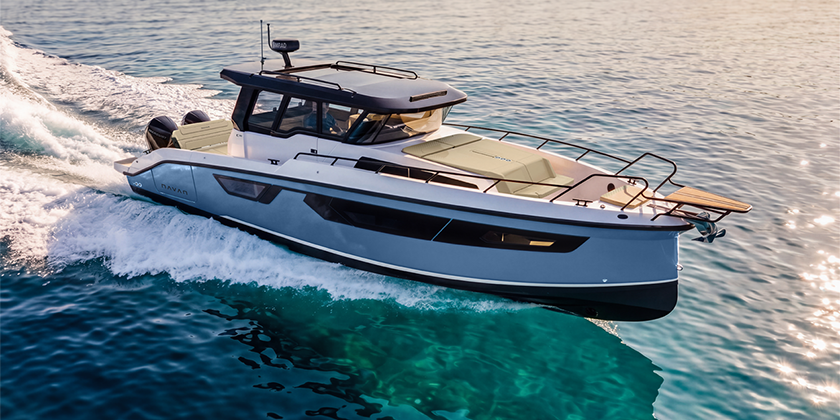
Seakeeper’s OBX 345 Express caught much attention during its summer demo tour. “Demos aboard our OBX were extremely successful in pre-sales,” said Andrew Semprevivo, Seakeeper VP of sales and marketing. “We sold 50 units before we even officially launched the Seakeeper 5.”
www.seakeeper.com

Related Posts


Good Advice that You Can Share – The Art of Anchoring  

Unless a boat is secured, it will drift away. If it cannot be attached to something secure, such as a dock, piling, mooring buoy, tree, or boulder, it must be anchored. There is much more to anchoring than simply tossing the anchor over the side. 
 
An anchoring system has two parts: the anchor itself and the rode which connects the anchor to the boat. To be effective, an anchor must have good holding power, and the rode must be strong enough to withstand the strains that are put on it. 

Read More


Need to Catch up on News This Week?

Every Tuesday we publish a fresh Digest with informative articles pertaining to the Canadian boating and marine industry. Stay up to date with the latest products, research and industry developments.

Missed an Issue of Boating Industry Canada News Week? If you’re looking for a specific issue, or simply want to catch up on previous issues, check out our Boating Industry Canada News Week Archives.

Not signed up for News Week? Subscribe here.


Rayglass 2400 makes its Australian debut at the 2026 Sydney Boat Show

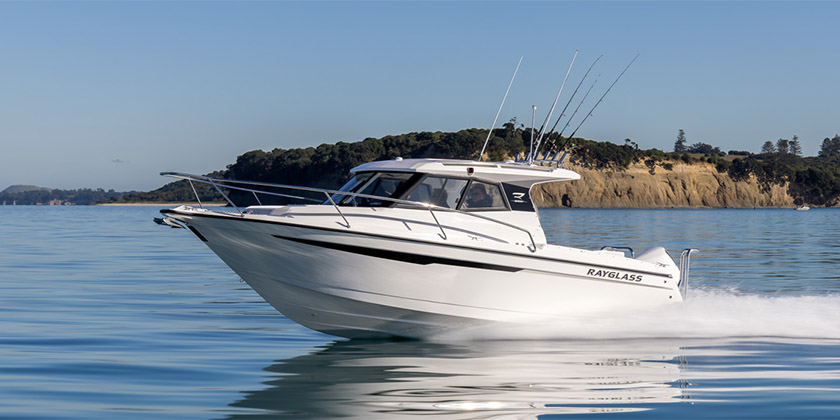
Rayglass Boats, a Brunswick Corporation (NYSE: BC) brand and a globally recognized designer and manufacturer of premium power boats, today announced that Australian boaters will get their first chance to see the Rayglass 2400 it in person for the first time. Queensland Marine Centre will bring the 2400 to the 2026 Sydney Boat Show, running 30 July – 2 August at Sydney Showgrounds, Sydney Olympic Park at Stand D104. The next generation 2700 will also be on display.

Read More


ePropulsion Enters Powered Kayak Fishing Market with Innovative kLite Electric Outboard

ePropulsion Americas, the global leader in marine electric propulsion systems and services, has announced that it is entering the powered kayak market with the all-new kLite 750 electric outboard. Building on the award-winning technology that shattered convention with the highly portable eLite, the kLite 750 is powerful, but contained in a lightweight and compact form factor ideal for recreational or fishing kayaks alike.

Read More