Donate Today to Support Great Lakes Safety
December 16, 2025

Donate to support something at the heart of Great Lakes safety: The observing systems that quietly work around the clock to keep people informed and protected.

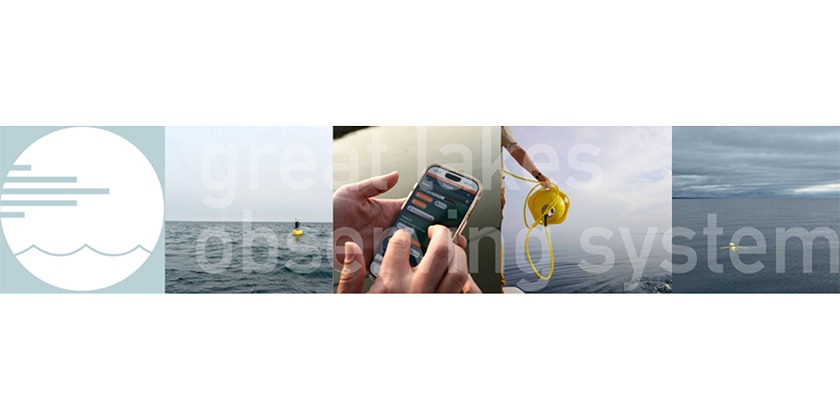
Across all five lakes, buoys and weather towers form the backbone of the Great Lakes observing network. They may seem simple, but together they deliver the real-time information that millions of people rely on each year.

Buoys are often the first line of safety on open water. By measuring waves, wind, temperature, and more, they help ship captains navigate shifting conditions, support charter operators and anglers planning their time on the water, and give sailors, paddlers, swimmers, and beachgoers crucial insight before hazardous conditions develop.
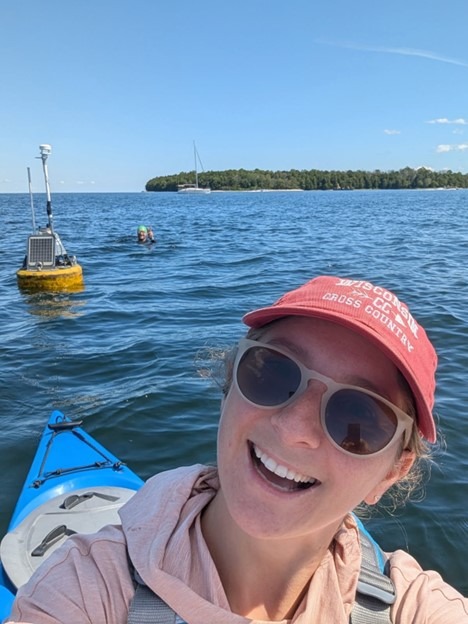
A kayaker and swimmer near the Nicolet Bay Buoy (managed by UW-Milwaukee) off of the Door peninsula of Wisconsin. Elaina Jindra

Weather towers measure winds, air temperature, and atmospheric pressure – all critical parameters for weather forecasters to assess local conditions and adjust predictions in near real-time.
 
These towers, located on the lake at lighthouses or at the shoreline, serve as year-round data collecting sentinels. 

These systems form a shared safety net for mariners, coastal communities, and the region’s economy.
  
While this information is free to the public, it is not free to collect or maintain. Your support keeps this critical infrastructure operating when it matters most.
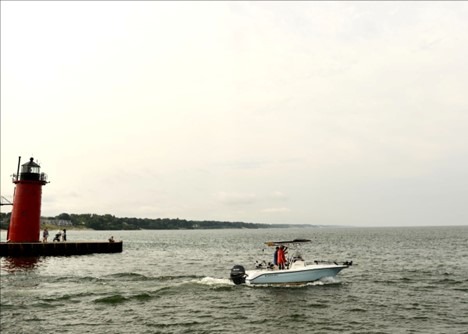
Anglers passing the South Haven Light (equipped with NOAA-GLERL weather station) on their way out to the open waters of Lake Michigan.
Samuel Johnson, GLOS.

Support the buoys and sensors that keep you safe on the Great Lakes:

Give Now https://glos.org/donate/
 
Thank you for helping protect these waters and the people who depend on them.

Sincerely,
The GLOS Team
Related Posts


Good Advice that You Can Share – The Art of Anchoring  

Unless a boat is secured, it will drift away. If it cannot be attached to something secure, such as a dock, piling, mooring buoy, tree, or boulder, it must be anchored. There is much more to anchoring than simply tossing the anchor over the side. 
 
An anchoring system has two parts: the anchor itself and the rode which connects the anchor to the boat. To be effective, an anchor must have good holding power, and the rode must be strong enough to withstand the strains that are put on it. 

Read More


Need to Catch up on News This Week?

Every Tuesday we publish a fresh Digest with informative articles pertaining to the Canadian boating and marine industry. Stay up to date with the latest products, research and industry developments.

Missed an Issue of Boating Industry Canada News Week? If you’re looking for a specific issue, or simply want to catch up on previous issues, check out our Boating Industry Canada News Week Archives.

Not signed up for News Week? Subscribe here.


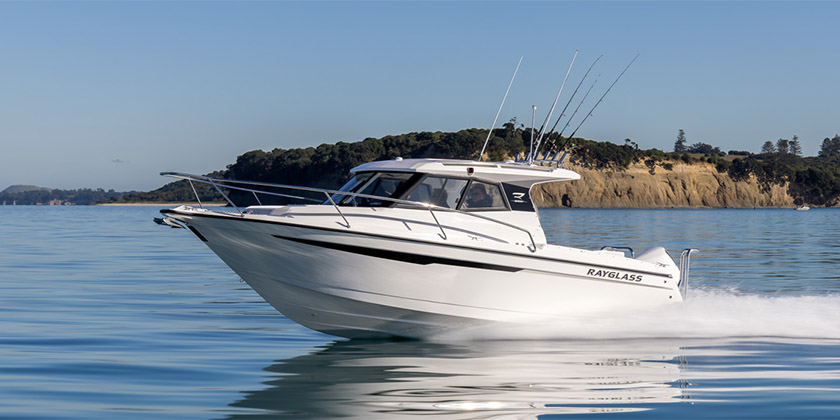
Rayglass 2400 makes its Australian debut at the 2026 Sydney Boat Show

Rayglass Boats, a Brunswick Corporation (NYSE: BC) brand and a globally recognized designer and manufacturer of premium power boats, today announced that Australian boaters will get their first chance to see the Rayglass 2400 it in person for the first time. Queensland Marine Centre will bring the 2400 to the 2026 Sydney Boat Show, running 30 July – 2 August at Sydney Showgrounds, Sydney Olympic Park at Stand D104. The next generation 2700 will also be on display.

Read More


ePropulsion Enters Powered Kayak Fishing Market with Innovative kLite Electric Outboard

ePropulsion Americas, the global leader in marine electric propulsion systems and services, has announced that it is entering the powered kayak market with the all-new kLite 750 electric outboard. Building on the award-winning technology that shattered convention with the highly portable eLite, the kLite 750 is powerful, but contained in a lightweight and compact form factor ideal for recreational or fishing kayaks alike.

Read More